Frequently Asked Questions
Everything you need to know before getting started.
GETTING STARTED
Which service is right for me?
The honest answer is — we'll figure that out together. Every dog and owner is different, which is why an Initial Consultation is always the first step. It gives Kelly the chance to meet you and your dog, understand what's really going on, and recommend the right path forward based on your specific situation rather than a guess.
If you're not quite ready to book a consultation and have questions first, that's completely fine. Reach out via phone or email and Kelly will happily chat things through before you commit to anything.
What areas do you service?
Kelly is based in Aura (Caloundra West) on the Sunshine Coast, Queensland, Australia.
She primarily serves Central and South Sunshine Coast — Maroochydore to Caloundra, including Cotton Tree, Alexandra Headland, Mooloolaba, Kuluin, Buderim, Warana, Bokarina, Birtinya, Kawana Waters, Wurtulla, Currimundi, Dicky Beach, Moffat Beach, Golden Beach, Pelican Waters, Little Mountain and Meridian Plains.
Not sure if you're in the area? If you're just outside the service zone, there are still options — Zoom consultations are available for those further afield, and Kelly is happy to meet at a public location within the service area if you're able to travel in. Get in touch and we'll figure out what works best for your situation.
How quickly will I see results?
Most clients leave their very first session with something tangible — a shift in their dog's behaviour, a new technique that works, or simply a clearer picture of what's been going on and how to address it. So while we don't promise overnight miracles, you won't be waiting long to see that things can be different.
By the end of a program, the goal is significant, lasting change — not just a better behaved dog, but an owner who feels genuinely confident carrying that progress forward on their own.
That said, every dog and situation is unique. More complex cases may need more than four weeks to really work through, and like anything worth doing, consistency plays a big role. The owners who see the fastest, most dramatic results are the ones who engage with the process between sessions. Kelly will make sure you always know exactly what to do and why — the rest is over to you.
ABOUT THE APPROACH
What training methods do you use?
Rather than following a single rigid methodology, Kelly takes an open-minded, dog-first approach — because what works brilliantly for one dog won't necessarily work for another. Every dog is an individual, shaped by their breed, their history and their personality, and good training starts with understanding that.
In practice, this means looking at the full picture. Who is your dog? What were they bred to do? Are their needs actually being met — enough movement, mental stimulation, play and time out in the world? A dog whose needs aren't met will always find their own ways to meet them, and that's often where problem behaviours come from.
From there, it's about building clear communication between you and your dog — so they understand what works and what doesn't — while developing the kind of relationship where they actually want to work with you. Training that sticks isn't just about changing behaviour. It's about building a genuine partnership.
If you've done some reading or spent time down the dog training rabbit hole online, you'll likely find Kelly's approach makes a lot of sense. And if you're newer to all of this, don't worry — Kelly explains everything in plain language so you always understand what you're doing and why.
Why should I choose a private trainer over a group class?
Group classes are a fantastic option and absolutely have their place — but they're not the right fit for every dog or every goal. Here's the difference.
In a private session, everything is built around you and your dog. The training plan, the pace, the location, the focus — it's all tailored to your specific situation rather than designed to work for a room full of different dogs and owners at once. Kelly's attention is entirely on your team, which means faster progress and fewer gaps.
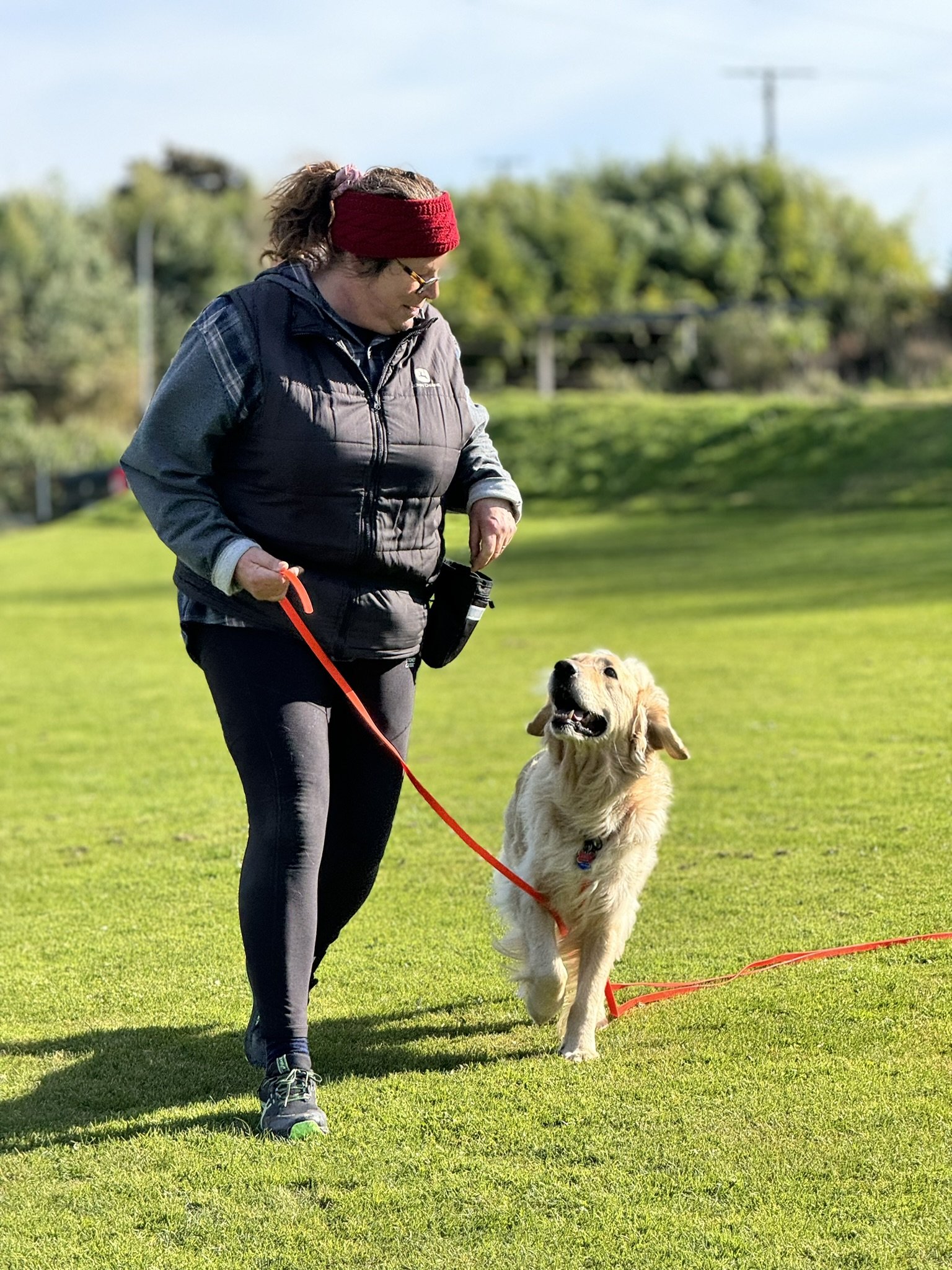
There's also the environment to consider. Private training happens where your dog actually lives and spends their time — at home, around the neighbourhood, or gradually out in the wider world as their skills develop. That real-world context makes a huge difference, particularly for dogs dealing with reactivity, anxiety or breed-specific behaviours that don't always show up neatly in a group setting.
For most dogs, especially those with specific behavioural concerns, private training simply gets results faster. If a group class is ever the better option for where you're at, Kelly will tell you — but for the majority of clients who come to Wolfe Dogs, one-on-one is where the real breakthroughs happen.
My dog has already been to training classes — will this be different?
For a lot of clients, Kelly isn't the first trainer they've worked with, and that's completely fine. Good training is good training, and if your dog already has solid foundations in place, we build on them. There's no need to start from scratch just for the sake of it.
For other dogs, what's been done previously simply hasn't stuck or isn't working anymore. In those cases, Kelly will assess where the gaps are and go back to basics where needed, filling in the missing pieces so there's a strong foundation to move forward from.
It's also worth knowing that training comes in a wide range of styles and skill levels, and finding the right fit makes a huge difference. Many of Kelly's clients have come to her after not getting the results they wanted elsewhere, and with a personalised approach tailored specifically to their dog, they've gone on to make really great progress. A past experience that didn't work out doesn't mean training won't work for your dog. Sometimes it just takes finding the right person.
If you've been burned before, don't let it put you off. Just come with an open mind and Kelly will take it from there.
YOUR SPECIFIC SITUATION
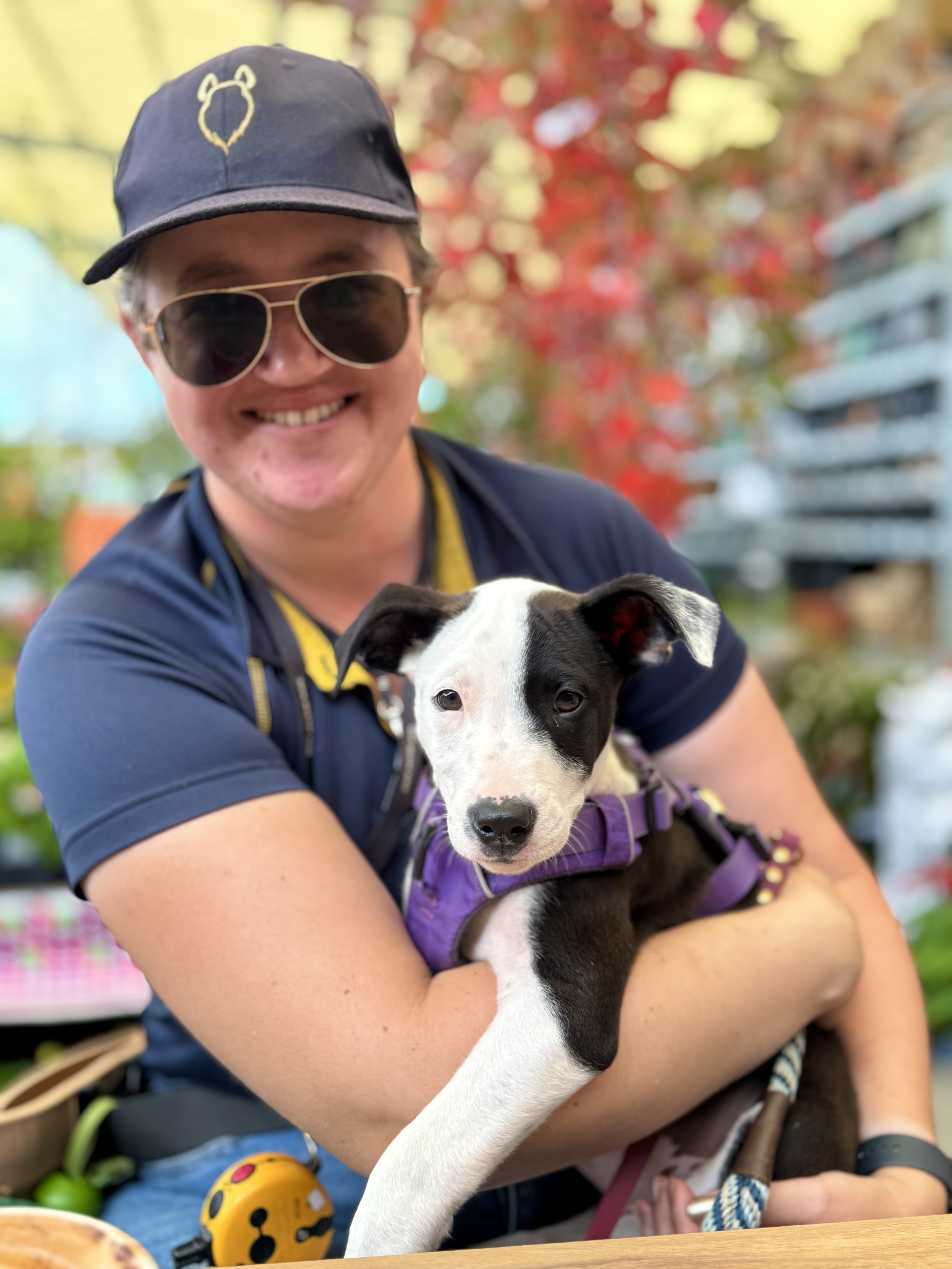
I have a puppy — when should I start training?
As soon as they come home. Seriously — the earlier the better.
Puppies go through a critical socialisation window before 16 weeks of age where they are actively forming their understanding of the world around them. What they experience during this period shapes who they become as an adult dog, which means waiting until vaccinations are complete before starting training is a missed opportunity you can't get back.
Kelly works with puppies from the very beginning, balancing safety with learning. Sessions start at home while your puppy completes their vaccination schedule, and as they develop, safe socialisation opportunities out and about are gradually introduced. It's about giving your puppy the best possible start — building confidence, good habits and a solid foundation before the world gets more complicated.
If you've just brought a new puppy home and you're not sure where to start, get in touch sooner rather than later. The socialisation window waits for no one.
My dog is really reactive or aggressive — can you still help?
In most cases, yes. If your dog barks, lunges or loses the plot at other dogs or people on a walk, you're in the right place — this is one of the most common challenges Kelly works with, and some of her most rewarding results have come from dogs who seemed like a lost cause at first.
Every case is assessed individually, because reactivity and aggression can look similar on the outside but have very different causes and solutions. There are some situations — particularly dogs with a serious bite history — that Kelly will refer on to a more appropriate specialist rather than take on directly. That honesty is part of how she works.
If you're not sure whether your dog is the right fit, just get in touch. A quick chat is all it takes to figure out whether Kelly can help, and if she can't, she'll point you in the right direction.
Can my kids be involved in the sessions?
Absolutely — families are very welcome, and getting kids involved in training can be a wonderful thing. Teaching children how to communicate and work with the family dog builds a relationship that benefits everyone, and for general obedience work Kelly is happy to include them in the session.
That said, a little honest advice: training sessions tend to be most effective when owners can give their full attention to what's being taught. If you know the kids are going to make that tricky, it can be worth having a parent learn the ropes first and then introducing the kids once you feel confident — you'll get more out of it that way.
For sessions involving reactivity or aggression, we do ask that children are kept well clear during the hands-on work. Safety comes first, and managing a reactive dog while keeping an eye on little ones isn't a situation anyone wants to be in.
If you're unsure how to handle it for your specific situation, just ask — Kelly will help you figure out the best approach before the session.
PRACTICALITIES
How many sessions will we need?
It depends on where you're starting from and what you're working towards, but here's a general guide.
For puppies and general obedience, a 4 Week Program is usually a great starting point. By the end of it, most dogs and owners have a solid foundation and the confidence to keep building on their own.
For behavioural challenges like reactivity, a 4 week program will make significant progress for most dogs. More complex cases may need a follow up program to get things to where they need to be. This is always reassessed as you go, so you're never locked into more than you need.
It's also worth remembering that training isn't a one-and-done event. It's an ongoing part of life with a dog. As your dog grows, matures and your goals evolve, new challenges and opportunities will come up. Many clients circle back at different stages of their dog's life to work on the next thing, whether that's building on earlier foundations, tackling something new or levelling up their skills together.
For clients who have completed a program and want to keep the momentum going, maintenance sessions are available on a session by session basis. Whether it's brushing up on skills, working through something new, or just keeping your dog sharp, Kelly is there when you need her.
Not sure what your dog needs? That's exactly what the Initial Consultation is for.
Do you offer payment plans?
Yes! The Initial Consultation is paid in full at the time of booking to secure your spot.
For programs, you have two options. You can pay in full upfront, or split it into two payments — 50% deposit to get started, and the remaining 50% at week three. Either way, you can focus on the training without having to find the full investment all at once.
If you have any questions about payment before booking, just get in touch and Kelly will be happy to help.
What happens if I need to cancel or reschedule?
Life happens — and Kelly gets that. If you need to reschedule your Initial Consultation, just give at least 24 hours notice and there's no problem at all.
Consultations are paid in full at the time of booking. If a reschedule is needed with less than 24 hours notice, a $50 rebooking fee will apply. This policy exists out of respect for Kelly's time and other clients who may have been waiting — but genuine emergencies, illness and injury are always handled with discretion and common sense.
If something comes up, just get in touch as soon as possible and we'll work it out.
What if the training doesn't work for my dog?
Every dog is an individual — shaped by their genetics, their history, their environment and the work that goes into them day to day. That means there's no one-size-fits-all answer, and no honest trainer should promise you one.
What Kelly does promise is this: she's in your corner for the whole process. If progress is slower than expected, or something isn't landing the way it should, the plan gets adjusted. That might mean tweaking the approach mid-program, reassessing goals, adding sessions, or putting together a follow-up plan to keep the momentum going. The program works around your dog — not the other way around.
Kelly also knows her limits. If she ever feels your dog would benefit from a different kind of support or specialist input, she'll tell you honestly and point you in the right direction. That's not a failure — it's just good practice.
The goal is always for clients to feel genuinely supported and to finish the program with real results and the confidence to keep going. If something isn't working, we talk about it and we find a way forward together.